
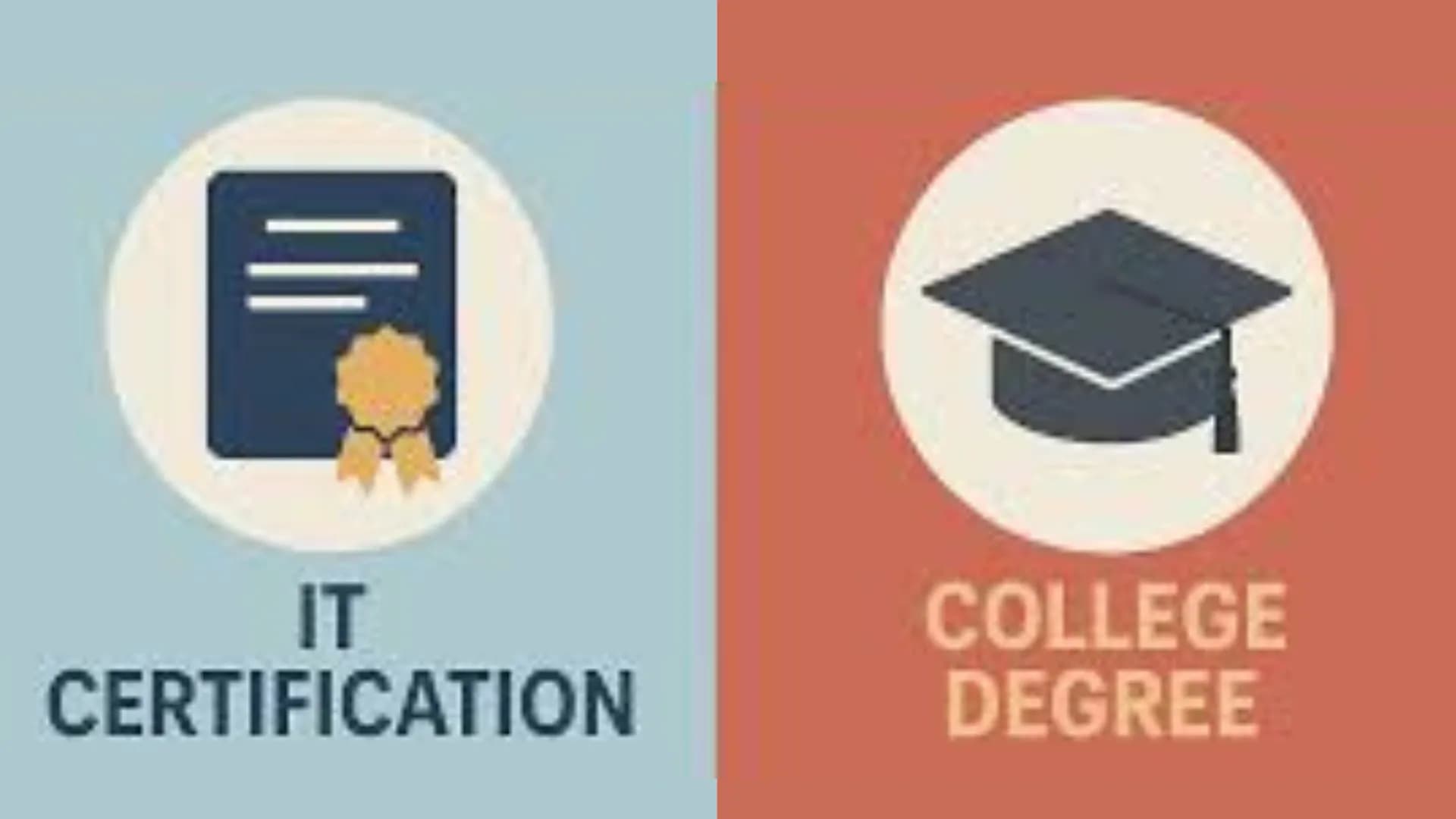
Certifications vs Degrees: What Should You Choose?
Introduction
In today’s fast-changing job market, many students question whether certifications are more valuable than traditional degrees. This confusion often arises due to evolving industry demands and the growing importance of skills over formal education.
In my opinion, both certifications and degrees have their own importance, depending on career goals and industry requirements.
Why Students Compare Certifications and Degrees
Students often feel uncertain about where to invest their time and effort. This confusion exists because:
- Industries are shifting towards skill-based hiring
- Degrees take longer to complete
- Certifications are quicker and more flexible
- Peer influence and online trends create pressure
This leads to doubt in choosing the right path.
The Role of Degrees in Career Growth
Degrees provide a strong academic foundation and structured learning.
They are important because:
- They offer in-depth knowledge of a subject
- Many careers require a formal degree
- They build discipline and long-term commitment
- They are essential for higher education
Degrees are often the first step toward stable career opportunities.
The Value of Certifications
Certifications focus on specific skills and practical knowledge.
Key benefits include:
- Short duration and quick learning
- Industry-relevant skills
- Better job readiness
- Opportunity to upskill or switch careers
Certifications help students stay updated with current trends.
Certifications vs Degrees – What Matters More?
There is no single answer—it depends on your goals:
- For specialized professions → Degrees are necessary
- For skill-based roles → Certifications can be more useful
- For a strong profile → A combination of both works best
Relying only on one can limit growth opportunities.
Common Mistakes Students Make
- Ignoring degrees completely for short-term certifications
- Doing multiple certifications without real understanding
- Choosing courses based on trends, not interest
- Not focusing on practical application
Avoiding these mistakes helps in making better decisions.
How to Choose the Right Path
A balanced approach can help you decide wisely.
Practical tips:
- Understand your career goals
- Research industry requirements
- Build both knowledge and skills
- Choose quality over quantity
- Focus on long-term growth
This approach reduces confusion and improves clarity.
Changing Your Perspective
Your mindset plays a key role in decision-making.
Instead of comparing certifications and degrees, focus on:
- Learning continuously
- Gaining practical experience
- Building a strong skill set
- Adapting to industry changes
This reduces pressure and helps you move forward confidently.
My Opinion – What Students Should Do
In my opinion, certifications and degrees should not be seen as alternatives but as complements.
A degree builds your foundation, while certifications enhance your skills. Together, they create a strong and competitive profile.
Best Strategy for Students
- Start with a strong academic base
- Add certifications to build skills
- Focus on practical learning
- Avoid blindly following trends
- Keep upgrading yourself regularly
Conclusion
Certifications and degrees both play an important role in career development. Instead of choosing one over the other, students should aim to combine both for better opportunities and long-term success.